

 Tiếng Việt
The dietary supplement market in Vietnam is currently in a state of chaos due to the explosion of stores labeled as “hand-carried” goods. Consumers tend to place absolute trust in Australian products because of the country’s stringent testing standards. However, this very trust has become a loophole for counterfeiters to smuggle low quality shipments from third countries. Many are willing to spend millions of VND on a single bottle, only to receive wheat flour or harmful active ingredients. Distinguishing real from fake is no longer a matter of a quick glance; it requires specialized knowledge and specific verification tools.
The “Hand-carried” Maze and the Vietnamese Preference for Foreign Goods
The obsession with imported goods has inadvertently created fertile ground for low-quality counterfeits to thrive. Many buyers rely solely on word of mouth recommendations or glamorous social media images while skipping the verification process. Fraudsters often exploit the desire for cheap prices or the “Australian domestic” label to turn a profit. Using counterfeit products not only causes economic loss but also directly threatens the user’s life. Consequences from unknown ingredients can lead to severe liver or kidney failure. You must change your shopping mindset by equipping yourself with professional identification skills starting now.
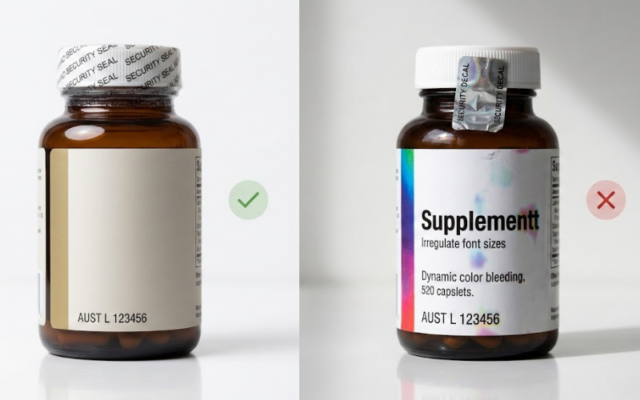
Common tactics used by dishonest traders to deceive customers:
-
Mixing in near-expired goods with altered or erased dates on the packaging.
-
Reusing authentic empty bottles from previous users and filling them with counterfeit contents.
-
Claiming goods are “informal imports” to avoid providing invoices and documentation.
-
Arbitrarily applying fake anti-counterfeit stamps to create a false sense of credibility.
Why Anti-Counterfeit Stamps Are No Longer a Reliable Measure
The anti-counterfeit stamps placed on bottle caps are no longer an absolute guarantee as they were years ago. Counterfeit facilities can print tens of thousands of stamps that look identical to those of official importers. Buyers often feel secure seeing a holographic stamp, but in reality, it is often just a cheap decal designed to deceive the eye. Many online sellers print their own stamps to assert fake prestige. This makes identifying products via stamps highly risky and impractical. You need a verification method based on data from the Australian government instead of relying on makeshift stickers.
Steps to Accurately Verify Australian Supplement Origins
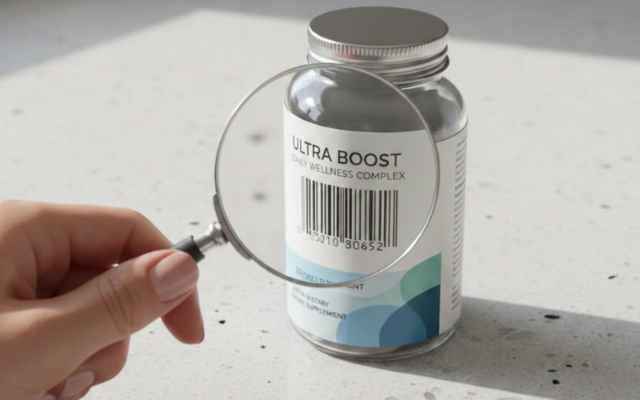
The verification process must be carried out systematically through official portals. Instead of checking barcodes with common phone apps which can easily display faked data you should use the Registration Code. Every product circulated in Australia must undergo a rigorous approval process and be assigned a unique identifier. Mastering this process protects you from sophisticated market scams. Start by observing specific symbols printed directly on the product’s body; this is information that no counterfeiting technology can perfectly match with the original database.
Look up the Registration Code on the Therapeutic Goods Administration (TGA) website (www.tga.gov.au) Every legal dietary supplement circulated in Australia must have a registration number on its packaging. This number typically starts with AUST L or AUST R, followed by a five or six digit sequence. This is the registration number in the Australian Register of Therapeutic Goods (ARTG) managed by the TGA. You can access their website directly, enter the code, and verify the information. If the results match the product name, manufacturer, and packaging specifications, it is an authentic product. This is the most scientific way to eliminate any doubt about the item’s origin.
Observe Packaging and Authentic Printing Details Besides looking up the code, meticulous observation of the packaging plays a key role in appraisal. Authentic Australian products always feature extremely sharp printing with a clear layout and zero typos. The edges of the labels are finely cut with no peeling or messy glue residue. Text printed on plastic containers usually has a slight texture and does not fade when rubbed firmly. In contrast, fakes often use cheap printing technology, resulting in blurred images and colors that are either too vibrant or too dull. Take the time to compare images on the official brand website with the physical product in your hand.
Quick Identification Tips:
-
Fonts: Uniform across the label; no unusual variations in size.
-
Colors: Realistic tones with moderate gloss under natural light.
-
Bottle Base: Clear recycling symbols and mold codes; no blurring.
-
Scent: The pills should smell like their active ingredients, not harsh chemicals.
Choose Reputable Distributors Over Advertisements
The point of purchase determines 90% of the product quality you will receive. Instead of trusting individual “hand carry” sellers with no clear address, you should seek out large pharmacies or official importing companies. These entities operate under legal supervision and provide full invoices to prove origin. Buying with an invoice not only guarantees quality but also provides a basis for complaints if issues arise. Do not hesitate to ask the seller for inspection papers or evidence of Australian importation. A transparent seller will never dodge legitimate questions from customers.

Health Recovery Solutions from Quality Product Lines
Once you know how to identify authentic goods, the next step is seeking products with scientific formulas. A quality product is defined by a transparent, verified ingredient list. You should prioritize lines with “key ingredients” that have been thoroughly researched for safety:
-
Strong’em (Sachets): Contains SE Activ1 to provide antioxidants and support recovery after illness or chemotherapy.
-
Strong’em Tablet Plus: Supplemented with Q-actin to support joint flexibility for athletes and those with arthritis.
-
Live’em Gut Health: Featuring PhytoBiome® Virgin Fibre to assist in heavy metal detox and effective constipation relief.
Investing in genuine products brings real value to your health and your family. Remember: proper prevention and recovery are far more important than consuming various products of unknown origin.
Note: These products are not medicines and are not intended to replace medical treatment.